Your Essential Guide to Choosing the Perfect Headlamp
A reliable headlamp is far more than a simple hands-free light; it is a critical piece of gear for anyone who ventures beyond the streetlights. Whether you're trail running at dusk, setting up camp after dark, tackling a home repair project in a dark corner, or responding to an emergency, a quality headlamp provides safety, freedom, and confidence. This comprehensive guide will illuminate the key features, technologies, and considerations to help you select the ideal headlamp for your specific needs and adventures.
Headlamp Frequently Asked Questions (FAQ)
Q: How many lumens do I really need for night hiking?
A: For most night hiking on established trails, a headlamp with a maximum output of 200-350 lumens is perfectly adequate. This provides enough light to see the trail ahead clearly and identify obstacles at a safe distance. Prioritize a model with a good balance of spot and flood beams and a long runtime on medium settings (around 100-150 lumens) rather than just the highest max brightness.
Q: What is the advantage of a rechargeable headlamp over one using AAA batteries?
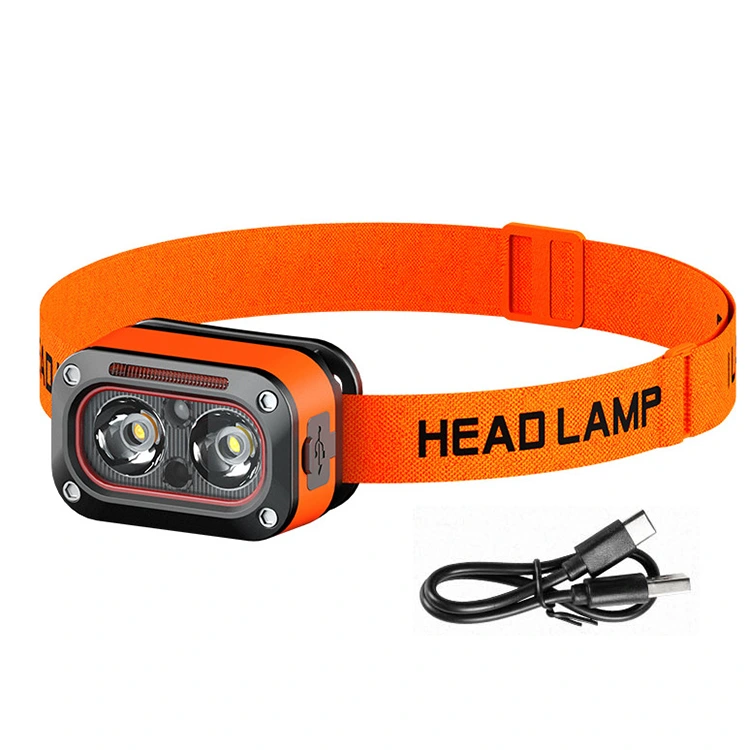
A: Rechargeable headlamps (using built-in Li-ion cells) offer significant long-term cost savings, reduce environmental waste, and provide consistent high performance. They are incredibly convenient—just plug in via USB. The trade-off is that if the battery dies in the field, you need a power bank to recharge it. AAA battery models offer instant power replacement and better performance in extreme cold, making them a dependable choice for remote expeditions or as a backup.
Q: What does "IPX8" waterproof rating mean for a headlamp?
A: An IPX8 rating means the headlamp is protected against continuous immersion in water under conditions specified by the manufacturer (usually depth and time, e.g., 2 meters for 1 hour). This makes it suitable for activities like caving, canyoneering, or use in extremely heavy, prolonged rain where the headlamp may be fully submerged. It offers a higher assurance of protection than IPX7 (1 meter for 30 minutes).
Q: Why is a red light mode important?
A: Red light mode is crucial because it preserves your natural night vision. The human eye's rods (responsible for low-light vision) are less sensitive to red wavelengths. Using a red light allows you to see in the dark without causing your pupils to constrict, so when you turn the light off, you can still see your surroundings. It also creates less light pollution and glare, making it courteous in shared spaces like campgrounds.
Q: How do I calculate and maximize my headlamp's battery life on a trip?
A: First, check the manufacturer's runtime graphs for different brightness levels. For example, if a headlamp runs for 10 hours on 100 lumens, and you plan to use it for 3 hours per night on a similar setting, one full charge covers over 3 nights. To maximize life: use the lowest sufficient brightness, utilize red light mode when possible, and in cold weather, keep the headlamp (or spare batteries) inside your jacket to prevent rapid power drain from low temperatures.
Q: Can I use regular alkaline batteries in a headlamp designed for rechargeables?
A: This depends entirely on the model. Headlamps with a "hybrid" power system are explicitly designed to safely accept both their proprietary rechargeable battery pack and standard AAA or AA batteries. However, many integrated rechargeable headlamps have a sealed, non-removable battery compartment that only accepts charging via USB. Never force incompatible batteries into a headlamp, as this can cause damage. Always consult the user manual.
Q: What is the benefit of a headlamp with a "regulated" output?
A: A regulated output provides consistent, unwavering brightness for the majority of the battery's discharge cycle. Without regulation, the light output starts high but dims progressively as the batteries drain. Regulation means you get predictable, full-power light for a set period (as stated in the runtime specs), and then it may drop off sharply or switch to a lower mode, which is much more reliable for planning your activity duration.
Care and Maintenance for Longevity
Proper care extends the life of your headlamp significantly. After use in wet conditions, dry it thoroughly with a soft cloth. Store it in a cool, dry place. For rechargeable models, avoid constantly draining the battery to 0%; partial discharges are better for long-term battery health. Periodically check the seals and the headband for wear and tear. Clean the lens gently with a microfiber cloth to maintain optimal light transmission.