Illuminate Your Workspace: The Ultimate Guide to Professional Work Light Solutions
In demanding professional environments, from construction sites and automotive garages to workshops and home DIY projects, proper illumination is not a luxury—it's a necessity. A high-quality work light is the cornerstone of safety, precision, and efficiency. This comprehensive guide delves into the world of professional-grade work lights, exploring their features, technical specifications, and applications to help you select the perfect lighting tool for your specific needs.
Why a Dedicated Work Light is Essential
General room lighting often creates shadows, glare, and insufficient brightness for detailed tasks. A dedicated work light provides directed, high-intensity illumination exactly where you need it. This minimizes eye strain, reduces the risk of accidents caused by poor visibility, and allows for meticulous attention to detail, whether you're welding, repairing machinery, or assembling delicate components.
Key Features of a High-Performance Work Light
Modern work lights predominantly use LEDs for their exceptional energy efficiency, long lifespan (often 50,000 hours or more), instant full brightness, and durability against vibrations.
Lumens measure total light output. A combination of high lumens with a focused flood or spot beam ensures wide-area coverage with intense central brightness.
Measured in Kelvin (K). Daylight white (5000K-6500K) reduces eye fatigue and provides accurate color rendering for tasks like painting or electrical work.
Look for robust housing (often aluminum or high-impact plastic), IP (Ingress Protection) ratings for water and dust resistance, and impact-resistant designs.
Options include corded (for continuous power), rechargeable battery-powered (for portability), or hybrid models. Battery runtime is critical for cord-free operation.
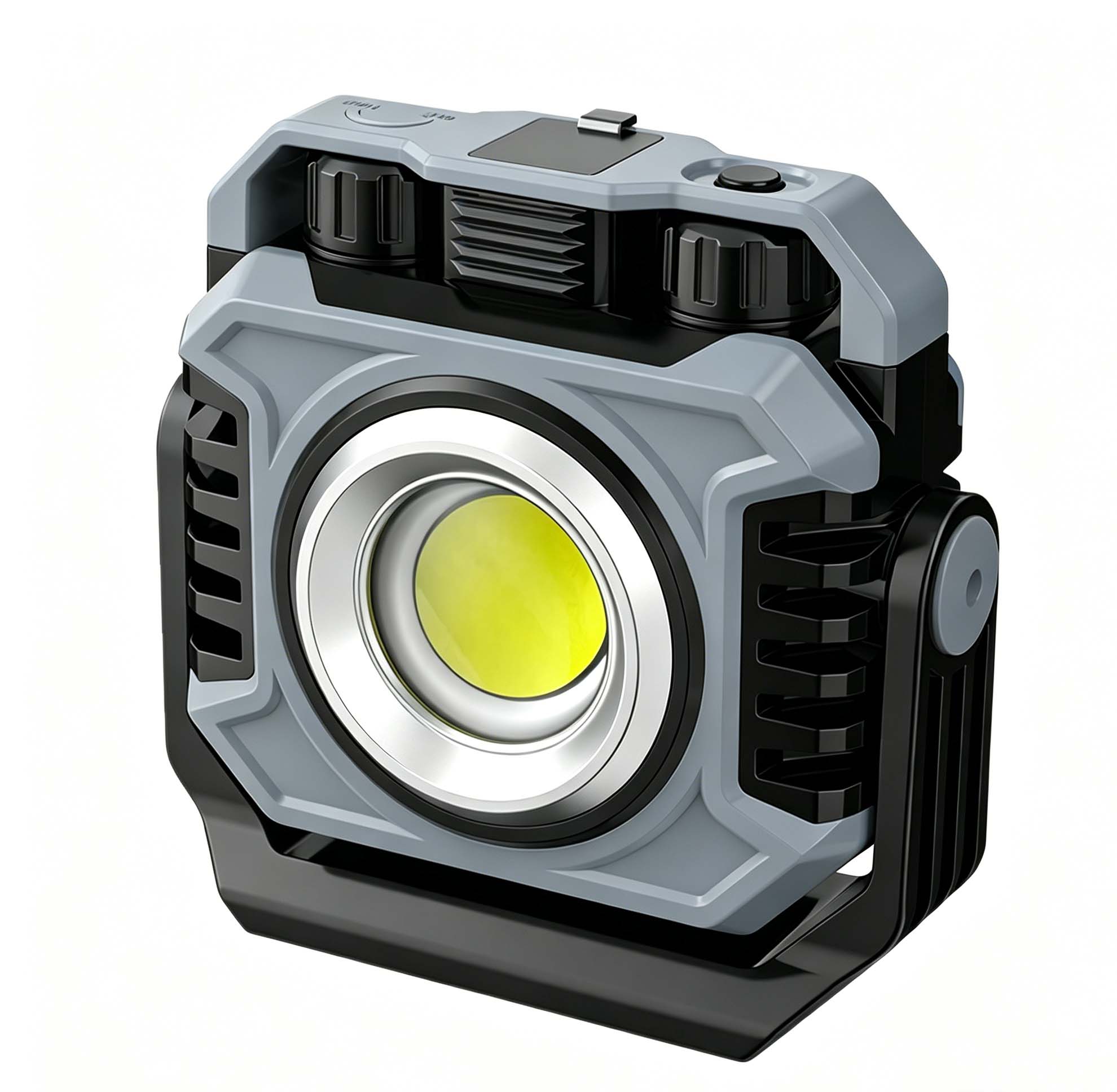
Magnetic bases, strong hooks, adjustable tripods, and flexible goosenecks allow for secure placement in any orientation.
Choosing the Right Work Light for Your Application
Selecting the optimal work light requires matching the tool's specifications to your primary tasks. For mobile mechanics, a high-lumen, battery-powered flood light with a magnetic base is indispensable. For stationary workshop benches, a bright, corded LED light bar or an adjustable-arm lamp provides consistent, shadow-free light. Electricians and IT technicians benefit immensely from compact, magnetic, USB-rechargeable lights with flexible necks for illuminating confined panels and cabinets. Always prioritize durability, appropriate brightness, and the right mounting solution for your workspace constraints.